
अगर किसी देश की Government अपनी currency को control करती है, तो एक सवाल बहुत logical लगता है:
अगर सरकार को पैसे की जरूरत है, तो वह बस और पैसा क्यों नहीं छाप देती?
अगर Government पर debt है, तो वह नया पैसा create करके debt क्यों नहीं चुका देती?
अगर देश में poverty है, तो Government हर citizen को ज्यादा पैसा क्यों नहीं दे देती?
पहली नजर में यह एक perfect solution लगता है।
लेकिन economics की सबसे important बातों में से एक यही है कि money और wealth एक ही चीज नहीं हैं।
Government currency की quantity बढ़ा सकती है, लेकिन सिर्फ ज्यादा money create करने से देश में ज्यादा food, houses, electricity, factories, skilled workers या technology पैदा नहीं हो जाती।
यही कारण है कि Why Can’t Governments Print Unlimited Money का जवाब सिर्फ “क्योंकि inflation हो जाएगी” नहीं है।
असल कहानी इससे कहीं ज्यादा interesting है।
इसमें money supply, production, demand, inflation, purchasing power, government debt, interest rates, currency confidence और central-bank policy—सभी की भूमिका होती है।
Money and Wealth Are Not the Same Thing
सबसे पहले एक basic difference समझना जरूरी है:
Money is a way of measuring and exchanging economic value. It is not economic wealth itself.
मान लीजिए किसी छोटे गांव में 100 परिवार रहते हैं।
गांव में:
- 1,000 kg rice है
- 100 houses हैं
- 2 doctors हैं
- 1 small hospital है
- 10 shops हैं
- 5 tractors हैं
अब मान लीजिए पूरे गांव में कुल ₹10 लाख money available है।
एक दिन किसी policy के कारण गांव में money की quantity बढ़कर ₹20 लाख हो जाती है।
क्या गांव में rice की quantity 1,000 kg से बढ़कर 2,000 kg हो गई?
नहीं।
क्या houses double हो गए?
नहीं।
क्या doctors की संख्या double हो गई?
नहीं।
क्या hospital की capacity double हो गई?
नहीं।
Money बढ़ा है, लेकिन real resources नहीं बढ़े।
यही सबसे basic reason है कि governments सिर्फ money create करके society को unlimited rich नहीं बना सकतीं।
What Money Actually Does
Money economy में कई important functions perform करता है।
यह:
- Medium of exchange है
- Unit of account है
- Store of value के रूप में काम कर सकता है
जब आप ₹500 देकर कोई product खरीदते हैं, तो आप उस product के बदले money exchange कर रहे हैं।
लेकिन उस ₹500 की usefulness इसलिए है क्योंकि दूसरे लोग भी उस money को accept करते हैं।
इसलिए currency के पीछे confidence और purchasing power बहुत important हैं।
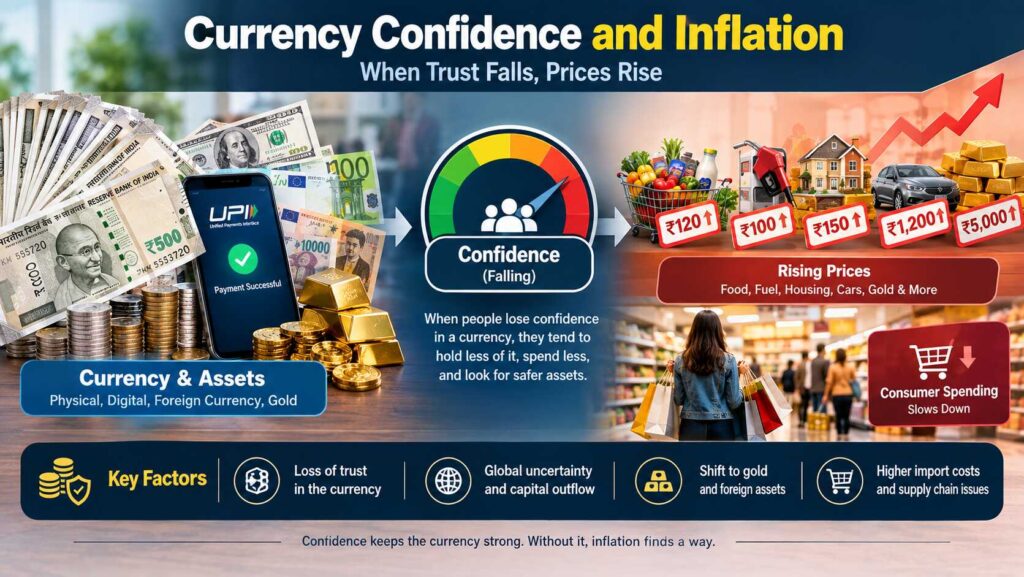
अगर किसी currency में लोगों का विश्वास बहुत कम हो जाए, तो लोग उस currency को hold करने के बजाय जल्दी से goods, foreign currency या other assets में बदलने की कोशिश कर सकते हैं।
यहीं से excessive money creation का दूसरा बड़ा risk सामने आता है।
Why More Money Doesn’t Automatically Mean More Wealth
मान लीजिए किसी economy में 1 million products available हैं।
अगर लोगों के पास खरीदने के लिए money बहुत कम है, तो demand कमजोर हो सकती है।
लेकिन अगर Government या financial system spending power बढ़ाता है, तो demand बढ़ सकती है।
अब businesses को ज्यादा orders मिल सकते हैं।
वे:
- Production बढ़ा सकते हैं
- Workers hire कर सकते हैं
- New machines खरीद सकते हैं
- Investment बढ़ा सकते हैं
इस situation में additional purchasing power economic activity को support कर सकती है।
लेकिन यह process unlimited नहीं है।
अगर factories already full capacity पर काम कर रही हैं और workers भी पूरी तरह employed हैं, तो demand बढ़ने पर production उसी speed से नहीं बढ़ पाएगा।
फिर prices बढ़ने का pressure ज्यादा हो सकता है।
इसलिए economy में सबसे important सवाल सिर्फ यह नहीं है कि:
“कितना पैसा है?”
बल्कि:
“उस money के मुकाबले कितनी goods और services available हैं?

What Does “Printing Money” Actually Mean?
“Printing money” phrase सुनते ही ज्यादातर लोग printing press और नए banknotes imagine करते हैं।
लेकिन modern economy में money creation सिर्फ physical notes तक limited नहीं है।
Bank of England के explanation के अनुसार, modern economies में commercial banks lending के माध्यम से bank deposits create करते हैं। यानी economy में money का एक बड़ा हिस्सा physical cash के बजाय bank deposits के रूप में मौजूद होता है।
इसलिए जब economists money creation की बात करते हैं, तो वे सिर्फ नए notes की संख्या नहीं देख रहे होते।
Money supply में:
- Currency
- Bank deposits
- Credit conditions
जैसे factors महत्वपूर्ण हो सकते हैं।
इसलिए “Government ने बहुत पैसा print कर दिया” एक simplified phrase है।
असल economic analysis ज्यादा complicated है।
Physical Cash vs Digital Money
आज आप किसी दुकान पर ₹2,000 का payment करते हैं।
जरूरी नहीं कि ₹2,000 का physical note आपके हाथ से दुकानदार के हाथ में जाए।
आप:
- UPI
- Debit Card
- Credit Card
- Bank Transfer
- Net Banking
से payment कर सकते हैं।
यह transaction banking system में digital balances के जरिए होता है।
इसलिए modern monetary system को समझने के लिए सिर्फ currency notes देखना पर्याप्त नहीं है।
How Banks Create Money Through Lending
जब commercial bank किसी eligible borrower को loan देता है, तो banking system में deposit create हो सकता है।
उदाहरण:
मान लीजिए bank किसी business को ₹10 लाख का loan देता है।
Business के bank account में ₹10 लाख का deposit दिखाई देता है।
अब business उस money से:
- Equipment खरीद सकता है
- Employees को pay कर सकता है
- Raw material खरीद सकता है
और वह money economy में circulate कर सकता है।
इसलिए money creation को समझने के लिए banking system की भूमिका भी समझनी जरूरी है।
Why Can’t Governments Print Unlimited Money?
अब सीधे original question पर आते हैं:
Why can’t governments print unlimited money?
सबसे simple answer है:
क्योंकि Government money की quantity बढ़ा सकती है, लेकिन real economic resources को उसी speed से create नहीं कर सकती।
अगर economy में money और spending power बहुत तेजी से बढ़ती है लेकिन production capacity limited रहती है, तो prices पर pressure बढ़ सकता है।
इसे एक simple example से समझते हैं।
More Purchasing Power vs Limited Resources
मान लीजिए किसी शहर में:
10,000 apartments
available हैं।
अब लोगों की purchasing power बहुत बढ़ जाती है।
लेकिन नए apartments बनाने की speed वही रहती है।
क्या apartments की quantity overnight बढ़ जाएगी?
नहीं।
अब ज्यादा buyers limited apartments के लिए compete करेंगे।
Prices बढ़ सकती हैं।
Real estate का example सिर्फ illustration है, लेकिन यही basic supply-demand principle कई markets में लागू होता है।
The Role of Production Capacity
Economy की production capacity को समझना बहुत important है।
मान लीजिए एक factory maximum:
10,000 units per month
produce कर सकती है।
लेकिन अभी वह सिर्फ:
6,000 units
produce कर रही है।
अगर demand बढ़ती है, तो factory:
6,000 → 7,000 → 8,000 → 9,000
units तक production बढ़ा सकती है।
इस situation में additional demand का बड़ा हिस्सा higher output से पूरा हो सकता है।
लेकिन जब factory:
10,000 units
की maximum capacity पर पहुंच जाती है, तब demand आगे बढ़ने पर production उसी speed से बढ़ाना मुश्किल होगा।
अगर buyers फिर भी ज्यादा खरीदना चाहते हैं, तो price pressure बढ़ सकता है।
यही कारण है कि Why Can’t Governments Print Unlimited Money का answer production capacity से भी जुड़ा है।
How Does Printing Money Lead to Inflation?
अब inflation को practically समझते हैं।
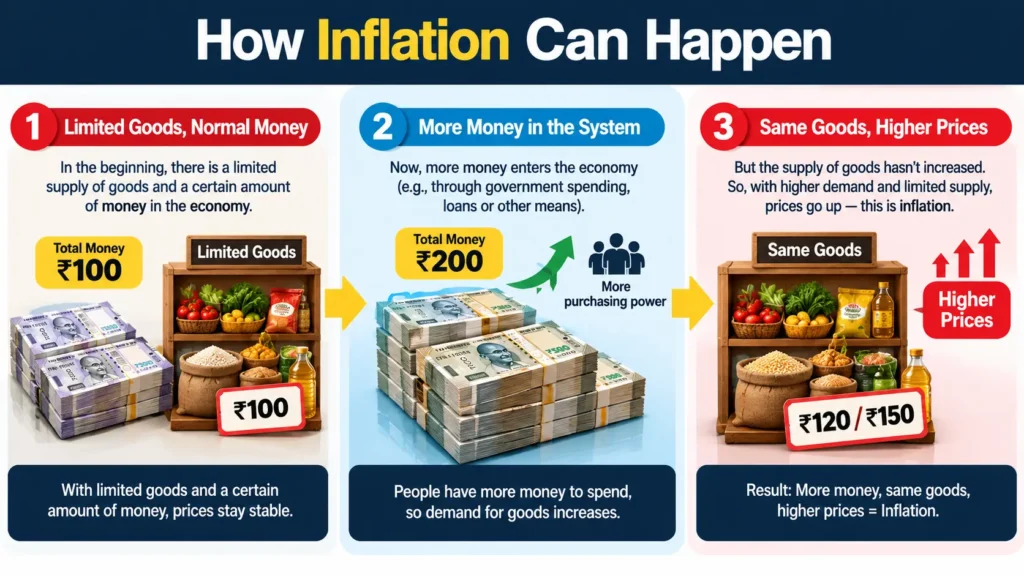
मान लीजिए किसी economy में 1,000 identical products available हैं।
हर product की कीमत:
₹100
है।
Total value:
1,000 × ₹100 = ₹1,00,000
अब consumers की spending power काफी बढ़ जाती है।
लेकिन products की quantity अभी भी:
1,000
ही है।
अब ज्यादा purchasing power limited supply के पीछे जा सकती है।
Sellers को prices बढ़ाने का मौका मिल सकता है।
मान लीजिए average price ₹100 से बढ़कर ₹120 हो जाती है।
अब वही 1,000 products:
1,000 × ₹120 = ₹1,20,000
की total sales value represent करते हैं।
यह एक simplified example है।
Real economy में prices एक समान percentage से नहीं बढ़तीं।
कुछ products की supply जल्दी बढ़ सकती है, कुछ की नहीं।
कुछ sectors में competition ज्यादा होता है।
कुछ goods import किए जाते हैं।
इसलिए actual inflation कई factors का result होती है।
लेकिन basic mechanism समझने के लिए यह example useful है:
अगर purchasing power supply की तुलना में बहुत तेजी से बढ़ती है, तो prices पर upward pressure आ सकता है।
More Money Chasing the Same Goods
Economics में अक्सर एक simplified phrase इस्तेमाल किया जाता है:
More money chasing too few goods.
इसका मतलब यह नहीं कि हर money-supply increase automatically inflation पैदा करता है।
इसका मतलब है कि अगर aggregate spending power तेजी से बढ़ती है और production उस demand को match नहीं कर पाता, तो economy में inflationary pressure बन सकता है।
Does Increasing Money Supply Always Cause Inflation?
नहीं।
यह distinction बहुत जरूरी है।
अगर कोई article कहता है:
“Government ने money supply बढ़ाई, इसलिए inflation exactly उसी proportion में बढ़ेगी।”
तो यह oversimplification है।
Real economy में inflation कई factors से प्रभावित होती है।
What Happens During a Recession?
मान लीजिए economy recession में है।
Factories की capacity underutilised है।
Unemployment ज्यादा है।
Consumers spending कम कर रहे हैं।
Businesses investment postpone कर रहे हैं।
ऐसे environment में additional demand economic activity को support कर सकती है।
अगर businesses के पास spare capacity है, तो वे production बढ़ा सकते हैं।
इसलिए additional spending का कुछ हिस्सा:
Higher Output
में बदल सकता है।
जरूरी नहीं कि पूरा effect:
Higher Prices
के रूप में आए।
When an Economy Is Near Full Capacity
अब दूसरी situation देखिए।
Economy already strong है।
Factories high utilisation पर हैं।
Labour market tight है।
Supply chains stretched हैं।
Demand तेजी से बढ़ती है।
अब businesses के लिए production को तुरंत उसी speed से बढ़ाना मुश्किल हो सकता है।
इस situation में additional demand prices पर ज्यादा pressure डाल सकती है।
इसलिए inflation को समझने के लिए economy की slack या spare capacity भी important है।
Supply Shocks Also Matter
Inflation सिर्फ money creation की वजह से नहीं आती।
Suppose:
- Crude oil prices sharply increase हो जाएं
- Major crop failure हो जाए
- Global supply chain disrupt हो जाए
- Energy costs बढ़ जाएं
तो production cost बढ़ सकती है।
Businesses higher costs को prices के रूप में pass on कर सकते हैं।
इसलिए:
Inflation ≠ Always Money Printing
यह एक बहुत important point है।
IMF के research material में भी inflation के demand-side और supply-side drivers के महत्व पर चर्चा की गई है।
Inflation और Purchasing Power का Connection
Inflation का सबसे practical impact है:
Purchasing Power का कम होना।
मान लीजिए आज आपके पास:
₹1,00,000
हैं।
अगर prices लगातार बढ़ती हैं, तो कुछ साल बाद वही ₹1,00,000 कम goods और services खरीद सकता है।
Nominal amount वही है।
लेकिन real purchasing power बदल गई।
यही reason है कि personal finance में inflation को ignore करना dangerous हो सकता है
Why Your ₹1 Lakh May Buy Less in the Future
मान लीजिए किसी family का monthly household expense:
₹40,000
है।
अगर overall cost of living समय के साथ बढ़ती है, तो future में उसी lifestyle को maintain करने के लिए ज्यादा money की जरूरत हो सकती है।
इसलिए long-term financial planning में सिर्फ:
“मेरे पास कितनी savings हैं?”
देखना पर्याप्त नहीं है।
आपको पूछना चाहिए:
“Inflation के बाद मेरी savings की real purchasing power कितनी होगी?”
Nominal Return vs Real Return
Suppose आपका investment:
8%
return देता है।
और inflation:
5%
है।
Simplified basis पर real return लगभग:
3%
हो सकता है।
Formula:
Real Return ≈ Nominal Return − Inflation
Actual real return taxes और compounding को ध्यान में रखने पर अलग हो सकता है।
लेकिन concept simple है:
अगर आपका investment return inflation से मुश्किल से ऊपर है, तो आपकी real wealth उतनी तेजी से नहीं बढ़ रही जितनी nominal number देखकर लग सकती है।
Why Can’t Governments Simply Print Money to Pay Their Debt?
अब एक common question:
“अगर government पर debt है, तो वह नया पैसा create करके debt क्यों नहीं चुका देती?”
यह idea superficially attractive है।
मान लीजिए Government पर:
₹10 lakh crore
का debt है।
अगर Government नया money create करके debt repay कर दे, तो accounting terms में debt reduce हो सकता है।
लेकिन economy में नया spending power भी inject हो सकता है।
अगर economy में पर्याप्त unused resources हैं, तो impact अलग हो सकता है।
लेकिन अगर economy पहले से capacity constraints का सामना कर रही है, तो additional spending inflationary pressure बढ़ा सकती है।
इसलिए debt को money creation से repay करना कोई “free lunch” नहीं है।
Government Borrowing vs Money Creation
Government financing के दो concepts को अलग समझिए।
Government Borrowing
Government bonds issue करती है।
Investors bonds खरीदते हैं।
Government funds receive करती है।
फिर Government को future में interest और principal obligations manage करने होते हैं।
Monetary Financing
दूसरी situation में central-bank money creation government financing में role निभा सकती है।
यह monetary policy और inflation के लिए अलग implications पैदा कर सकती है।
इसलिए:
Government borrowing = Money printing
कहना technically सही नहीं है।
What Is Seigniorage?
Government/monetary authority द्वारा money issuance से मिलने वाले economic benefit को broadly Seigniorage कहा जाता है।
सरल भाषा में:
Currency issue करने से issuing authority को resources acquire करने की क्षमता मिल सकती है।
लेकिन यह unlimited revenue source नहीं है।
अगर money creation बहुत ज्यादा हो जाए और लोग currency की purchasing power पर विश्वास खोने लगें, तो currency hold करने की willingness कम हो सकती है।
इसलिए:
Money creation can provide resources, but it cannot provide unlimited real resources without economic consequences.
Why Does Public Confidence in Currency Matter?
Currency की value का एक हिस्सा trust पर आधारित होता है।
जब आप ₹1,000 accept करते हैं, तो आपको विश्वास होता है कि कोई दूसरा व्यक्ति भी उस ₹1,000 को accept करेगा।
लेकिन imagine कीजिए लोगों को लगने लगे कि:
“इस currency की value बहुत तेजी से गिरने वाली है।”
तब लोग cash hold करने से बच सकते हैं।
वे अपने money को जल्दी से:
- Goods
- Foreign currency
- Gold
- Real estate
- Other assets
में बदलना चाह सकते हैं।
इससे money की circulation तेज हो सकती है।
Velocity of Money
इसे समझने के लिए Velocity of Money useful concept है।
मान लीजिए आपके पास ₹10,000 हैं।
आप उन्हें एक साल तक bank account में रखते हैं।
दूसरी तरफ कोई व्यक्ति ₹10,000 लेकर लगातार transactions करता है:
Consumer → Shop → Supplier → Worker → Business
तो वही money कई transactions में इस्तेमाल हो सकता है।
इसलिए economy में money का impact सिर्फ quantity पर depend नहीं करता।
यह भी matter करता है कि लोग money को:
Hold कर रहे हैं या Spend कर रहे हैं।
Inflation Expectations
मान लीजिए consumers को लगता है कि अगले महीने prices काफी बढ़ जाएंगी।
वे आज ही purchases बढ़ा सकते हैं।
Businesses को लगता है कि future costs बढ़ेंगी।
वे prices पहले बढ़ा सकते हैं।
Workers higher wages मांग सकते हैं।
इस तरह expectations actual economic behaviour को प्रभावित कर सकती हैं।
इसलिए central banks inflation expectations को भी closely monitor करते हैं।
What Is Hyperinflation?
Normal inflation और Hyperinflation को एक जैसा नहीं समझना चाहिए।
Normal inflation में prices समय के साथ बढ़ती हैं।
Hyperinflation extreme और rapidly accelerating price increases की situation होती है।
ऐसी स्थिति में currency की purchasing power बहुत तेजी से गिर सकती है।
लोग currency को hold करने के बजाय जल्दी spend या exchange करने की कोशिश कर सकते हैं।
इससे एक dangerous feedback loop बन सकता है:
Currency Confidence ↓
→
People Hold Less Currency
→
Spending/Velocity ↑
→
Prices ↑
→
Currency Confidence Further ↓
यह हर inflation episode में नहीं होता।
लेकिन extreme monetary instability में यह dynamic बहुत important हो सकता है।
Zimbabwe Hyperinflation: A Real-World Case Study
Zimbabwe का experience इस topic का सबसे famous examples में से एक है।
लेकिन इसे carefully समझना चाहिए।
यह सिर्फ:
“Government ने ज्यादा notes print किए।”
की simple story नहीं थी।
Zimbabwe में severe fiscal problems, central-bank quasi-fiscal operations और monetary financing जैसे factors एक broader economic crisis के साथ जुड़े हुए थे।
IMF के analysis के अनुसार, 2007–08 में monetary financing और severe fiscal imbalances ने inflationary pressures को extreme levels तक पहुंचाने में भूमिका निभाई।
2008 तक Zimbabwe की currency की purchasing power तेजी से collapse हो रही थी।
IMF material के अनुसार, September 2008 में 12-month inflation का estimate लगभग 500 billion percent तक पहुंच गया था।
यह normal inflation नहीं थी।
यह monetary system के severe breakdown की स्थिति थी।
What Made Zimbabwe’s Situation So Extreme?
कई factors एक साथ काम कर रहे थे:
- Fiscal imbalances
- Monetary financing
- Economic contraction
- Production weakness
- Currency confidence का collapse
- Rapidly rising velocity
- Foreign-currency substitution
जब लोगों को local currency पर भरोसा नहीं रहा, तो उन्होंने उसे hold करने से बचना शुरू किया।
यह situation inflation को और accelerate कर सकती है।
इस case से सबसे important lesson है:
Currency की credibility और economic production दोनों monetary stability के लिए महत्वपूर्ण हैं।
Zimbabwe Example को गलत तरीके से इस्तेमाल न करें
यह कहना गलत होगा:
“अगर कोई central bank money supply बढ़ाएगा तो Zimbabwe जैसा hyperinflation जरूर होगा।”
ऐसा नहीं है।
हर economy की:
- Institutions
- Fiscal position
- Currency system
- Production capacity
- Financial markets
- Inflation expectations
- Policy credibility
अलग होती है।
Zimbabwe एक extreme case study है, universal formula नहीं।
Why Central Banks Matter
Modern economy में central bank की role बहुत important है।
Central banks monetary conditions को influence करते हैं।
इनके प्रमुख tools में interest rates और liquidity-related measures शामिल हो सकते हैं।
अगर inflation बहुत ज्यादा हो रही है, तो tighter monetary policy demand को moderate करने में मदद कर सकती है।
अगर economy weak है और inflation controlled है, तो easier monetary conditions economic activity को support कर सकती हैं।
यानी central bank का काम सिर्फ money “print” करना नहीं है।
यह economy के:
Inflation + Growth + Liquidity + Financial Conditions
को balance करने की कोशिश करता है।
Interest Rates का क्या Role है?
मान लीजिए central bank interest rates बढ़ाता है।
Banks के loans महंगे हो सकते हैं।
Businesses के borrowing decisions बदल सकते हैं।
Consumers बड़े purchases postpone कर सकते हैं।
Savings relatively attractive हो सकती हैं।
इससे overall demand moderate हो सकती है।
दूसरी तरफ rates कम होने पर borrowing और spending को support मिल सकता है।
लेकिन monetary policy का effect instant नहीं होता।
Economy में policy changes को पूरी तरह reflect होने में time लग सकता है।
What Is the RBI’s Role in India?
भारत में monetary policy की central role Reserve Bank of India (RBI) निभाता है।
RBI के monetary policy framework का primary objective price stability maintain करना while keeping in mind the objective of growth है।
India के Flexible Inflation Targeting framework में CPI inflation का target:
4%
रखा गया है।
Tolerance band:
2% से 6%
है।
इसका मतलब यह नहीं कि inflation हर महीने exactly 4% होगी।
Target medium-term monetary policy framework का हिस्सा है।
RBI interest rates और अन्य monetary-policy tools के माध्यम से monetary conditions को influence करता है।
Why RBI Cannot Simply Finance Unlimited Government Spending
यहां India का fiscal framework महत्वपूर्ण हो जाता है।
भारत में पहले government deficit के automatic monetisation की व्यवस्था थी।
RBI के historical material के अनुसार, automatic monetisation को 1997 में phase out किया गया और इसके स्थान पर Ways and Means Advances (WMA) व्यवस्था लाई गई।
WMA का उद्देश्य Government के temporary cash-flow mismatches को manage करना है।
यह unlimited government financing का mechanism नहीं है।
इसके अलावा Fiscal Responsibility and Budget Management (FRBM) Act, 2003 fiscal discipline और macroeconomic stability से जुड़ा महत्वपूर्ण framework है।
इसका broader उद्देश्य sustainable fiscal management और monetary policy के effective conduct के लिए conducive environment बनाना है।
इसलिए India में Government spending, borrowing और monetary policy के बीच institutional boundaries और frameworks मौजूद हैं।
Government Borrowing Is Not Free Money
Government अगर bonds issue करके ₹1 lakh crore borrow करती है, तो उसे future obligations manage करने होंगे।
Government debt पर interest देना पड़ता है।
अगर borrowing लगातार बढ़ती है, तो interest burden भी बढ़ सकता है।
इसलिए government के सामने long-term fiscal trade-offs होते हैं।
Government spending जरूरी हो सकती है।
Infrastructure investment growth को support कर सकता है।
Social spending भी जरूरी हो सकता है।
लेकिन fiscal policy sustainable रहना भी important है।
इसीलिए:
Government Debt ≠ Unlimited Spending Power
Can Money Creation Ever Help an Economy?
अब तक article पढ़कर ऐसा लग सकता है कि money creation हमेशा bad है।
ऐसा नहीं है।
Money creation modern economies का normal हिस्सा है।
Commercial banks lending के माध्यम से deposits create करते हैं।
Central banks monetary conditions adjust करते हैं।
Economic growth के साथ nominal money demand भी बदल सकती है।
और recession या financial stress जैसी situations में policy support की जरूरत हो सकती है।
Important बात है:
Scale + Timing + Economic Conditions
अगर economy में unused capacity है, तो additional demand output को support कर सकती है।
अगर economy already supply constraints में है, तो वही demand ज्यादा inflationary हो सकती है।
इसलिए monetary policy को context के साथ समझना चाहिए।
The Quantity Equation: Money, Prices and Output
Money और prices के relationship को समझने के लिए economics में एक famous framework है:
MV = PY
जहां:
M = Money Supply
V = Velocity of Money
P = Price Level
Y = Real Output
यह equation एक useful conceptual framework है।
अगर money supply बढ़ती है, तो inflation का impact इस बात पर depend कर सकता है कि:
- Velocity क्या कर रही है?
- Real output कितना बढ़ रहा है?
- Economy की productive capacity क्या है?
इसीलिए सिर्फ money supply देखकर inflation का exact future बताना संभव नहीं है।
Why Inflation Is Important for Investors
अब इस topic को stock market से जोड़ते हैं।
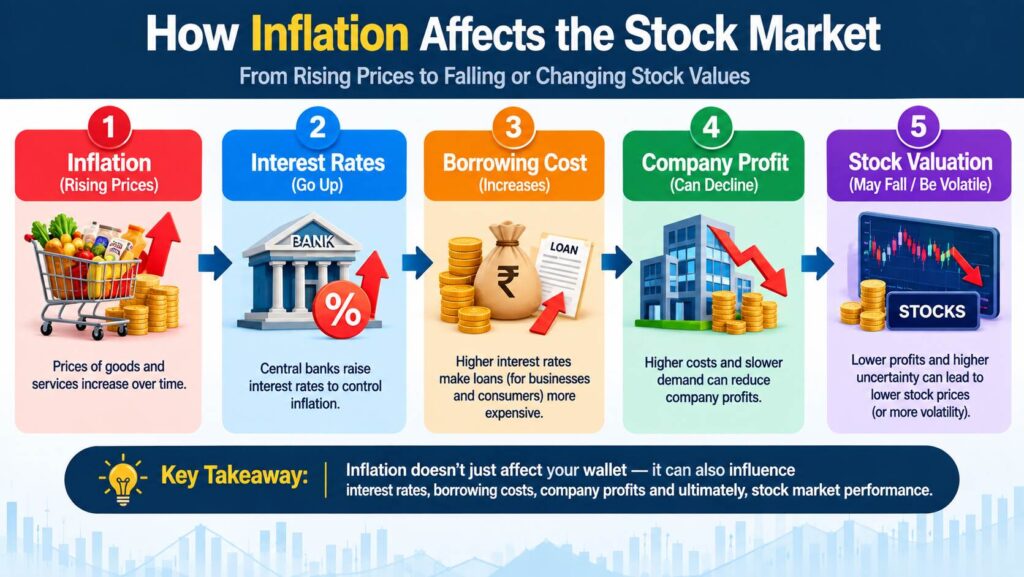
मान लीजिए inflation बढ़ती है।
Central bank rates बढ़ाता है।
अब companies के लिए borrowing cost बढ़ सकती है।
जिस company के पास:
- High Debt
- High Interest Expense
- Low Margins
हैं, उस पर pressure बढ़ सकता है।
दूसरी तरफ ऐसी company जिसके पास:
- Low Debt
- Strong Cash Flow
- High Pricing Power
- Strong Balance Sheet
है, वह inflationary environment को comparatively बेहतर handle कर सकती है।
इसलिए investor के लिए inflation सिर्फ macroeconomic headline नहीं है।
यह company analysis को भी प्रभावित कर सकती है।
Inflation और Company Margins
मान लीजिए किसी company का product ₹100 में बिकता है।
उसकी cost ₹70 है।
Gross spread:
₹30
है।
अब raw-material और labour costs बढ़कर ₹80 हो जाती हैं।
अगर company price ₹100 ही रखती है, तो margin पर pressure आएगा।
लेकिन अगर company price ₹110 कर सकती है और customers फिर भी product खरीदते हैं, तो वह cost inflation का बड़ा हिस्सा pass through कर सकती है।
यही है:
Pricing Power
इसलिए inflation के environment में investor को सिर्फ Revenue growth नहीं देखना चाहिए।
उसे यह भी देखना चाहिए:
- Gross Margin
- Operating Margin
- EBITDA Margin
- Debt
- Interest Expense
- Free Cash Flow
- Pricing Power
Inflation and Stock Valuation
Stock valuation future cash flows से जुड़ी होती है।
Interest rates और required returns बढ़ने पर future cash flows की present value पर pressure आ सकता है।
इसीलिए rising interest rates कई situations में valuation multiples को compress कर सकती हैं।
लेकिन:
Inflation ↑ = Every Stock ↓
ऐसा कोई universal rule नहीं है।
Company-specific earnings growth, pricing power, debt, sector economics और investor expectations भी matter करते हैं।
Why More Money Doesn’t Automatically Make Everyone Rich
यह शायद इस पूरे topic का सबसे important takeaway है।
Imagine कीजिए Government हर citizen के bank account में:
₹1 crore
deposit कर देती है।
क्या सभी लोग real sense में अमीर हो गए?
उनके bank balances तो बहुत बढ़ गए।
लेकिन क्या:
- Houses double हो गए?
- Food production double हो गया?
- Doctors double हो गए?
- Electricity generation double हो गई?
- Hospitals double हो गए?
- Roads instantly double हो गईं?
- Skilled workers की संख्या double हो गई?
नहीं।
अगर real resources लगभग वही रहें और purchasing power बहुत बढ़ जाए, तो goods और services की prices adjust हो सकती हैं।
इसलिए:
More money can make people richer in nominal terms without making the economy richer in real terms.
Real economic wealth productivity और production capacity से आती है।
What Actually Makes a Country Rich?
Long-term wealth creation के लिए economy को ज्यादा productive बनना पड़ता है।
इसके लिए जरूरी हैं:
Productivity
एक worker या machine ज्यादा output produce करे।
Technology
Better technology production को faster और cheaper बना सकती है।
Infrastructure
Roads, ports, electricity और digital networks economic efficiency improve करते हैं।
Human Capital
Education, skills और healthcare workforce productivity को improve कर सकते हैं।
Investment
Factories, machines, research और businesses future productive capacity बढ़ाते हैं।
Strong Institutions
Stable laws, property rights, credible monetary policy और effective institutions investment को support कर सकते हैं।
इसलिए किसी country की long-term prosperity का sustainable रास्ता सिर्फ money creation नहीं है।
The Biggest Misconception About Printing Money
सबसे बड़ी misconception है:
“अगर Government अपनी currency खुद बनाती है, तो वह किसी भी amount में spending कर सकती है और उसे कोई cost नहीं होगी।”
यह सही नहीं है।
Government की real constraint सिर्फ accounting balance नहीं है।
Real constraint है:
Available resources.
अगर economy में unemployed workers और unused factories हैं, तो Government spending additional production को support कर सकती है।
लेकिन अगर economy already capacity limits के करीब है, तो additional spending:
Higher Prices
का रूप ले सकती है।
और अगर policy credibility कमजोर होती है, तो:
Currency Confidence
पर भी pressure आ सकता है।
इसलिए sovereign currency issuer होने का मतलब यह नहीं है कि country की resources unlimited हो जाती हैं।
Final Takeaway
तो आखिर:
Why Can’t Governments Print Unlimited Money?
क्योंकि money की quantity बढ़ाना और real wealth बढ़ाना दो अलग चीजें हैं।
Government और monetary system money supply को बढ़ा सकते हैं।
लेकिन money create करने से:
Food नहीं बनता।
Houses नहीं बनते।
Factories automatically नहीं बनतीं।
Electricity generate नहीं होती।
Skilled workers instantly पैदा नहीं होते।
Technology अपने आप develop नहीं होती।
अगर economy की production capacity और productivity भी बढ़ रही है, तो additional money और demand को economy absorb कर सकती है।
लेकिन अगर money और spending power लगातार real production से बहुत आगे निकल जाएं, तो inflationary pressure बढ़ सकता है।
अगर inflation expectations और currency confidence भी बिगड़ जाएं, तो situation और गंभीर हो सकती है।
Zimbabwe का extreme hyperinflation episode इस risk का historical example है।
लेकिन Zimbabwe को हर economy का automatic future समझना भी गलत होगा।
India में RBI का monetary-policy framework price stability को economic growth के साथ balance करने की कोशिश करता है। India में CPI inflation का medium-term target 4% है, जिसमें 2%–6% tolerance band है।
Fiscal policy के लिए FRBM framework और Government cash management के लिए WMA जैसे institutional mechanisms भी मौजूद हैं।
इसलिए किसी economy को समझने के लिए सिर्फ यह पूछना:
“कितना पैसा छापा गया?”
काफी नहीं है।
आपको यह देखना होगा:
Money Supply
Production
Productivity
Demand
Inflation
Interest Rates
Government Debt
Currency Confidence
और Economic Growth
इन सभी को साथ में देखना जरूरी है।
सबसे simple way में याद रखिए:
Money can be created. Real wealth has to be produced.
और यही वह fundamental reason है कि governments unlimited money create करके unlimited wealth नहीं बना सकतीं।
Frequently Asked Questions
Q 1. Can governments print unlimited money?
Government अपनी currency में additional money create कर सकती है, लेकिन unlimited money creation real resources को unlimited नहीं बनाती। अगर spending power production capacity से बहुत आगे निकलती है, तो inflation और other economic risks बढ़ सकते हैं।
Q 2. Does printing money always cause inflation?
नहीं। Inflation कई factors पर depend करती है, जिसमें demand, supply, production capacity, money velocity, expectations, commodity prices और monetary तथा fiscal policy शामिल हैं।
Q 3. Why can’t governments print money to eliminate poverty?
क्योंकि poverty सिर्फ money की कमी नहीं है। Poverty का संबंध income, productivity, employment, education, healthcare, housing और access to goods and services से भी है। Money transfer purchasing power बढ़ा सकता है, लेकिन economy की productive capacity अपने आप नहीं बढ़ाता।
Q 4. Can governments print money to repay debt?
कुछ forms of monetary financing technically possible हैं, लेकिन बड़े scale पर money creation से inflation, currency confidence और monetary-policy credibility पर pressure पैदा हो सकता है। इसलिए इसे free method of debt repayment नहीं माना जा सकता।
Q 5. What is the difference between money and wealth?
Money exchange और accounting का medium है। Real wealth economy की productive assets, resources, technology, infrastructure, human capital और goods तथा services produce करने की capacity से जुड़ी होती है।
Q 6. What is hyperinflation?
Hyperinflation extreme और rapidly accelerating inflation की स्थिति है, जिसमें currency की purchasing power बहुत तेजी से गिर सकती है और लोग currency को hold करने से बचने लग सकते हैं।
Q 7. What is the RBI’s role in inflation?
RBI monetary policy के माध्यम से price stability को pursue करता है, जबकि growth को भी ध्यान में रखा जाता है। Interest rates और अन्य monetary-policy tools के जरिए RBI economic and financial conditions को influence करता है।
Q 8. Is money creation always bad?
नहीं। Money creation modern economy का normal हिस्सा है। Banking system lending के जरिए deposits create करता है और central banks monetary conditions को adjust करते हैं। Problem excessive और poorly managed monetary expansion से पैदा हो सकती है, खासकर जब economy supply constraints के करीब हो।
Sources & References
- Reserve Bank of India (RBI) — Monetary Policy Framework और inflation target.
- Reserve Bank of India (RBI) — Government cash management, Ways and Means Advances तथा monetary/fiscal framework.
- Reserve Bank of India (RBI) — Historical material on automatic monetisation and transition to WMA.
- Government of India / India Code — Fiscal Responsibility and Budget Management Act, 2003.
- Bank of England — “Money creation in the modern economy.”
- International Monetary Fund (IMF) — Inflation, monetary policy और monetary financing से संबंधित research.
- International Monetary Fund (IMF) — Zimbabwe के hyperinflation episode और monetary developments पर analysis.
Note: यह article educational और informational purposes के लिए है। Inflation, monetary policy और financial markets complex subjects हैं। किसी specific investment decision के लिए केवल इस article को आधार नहीं बनाना चाहिए।